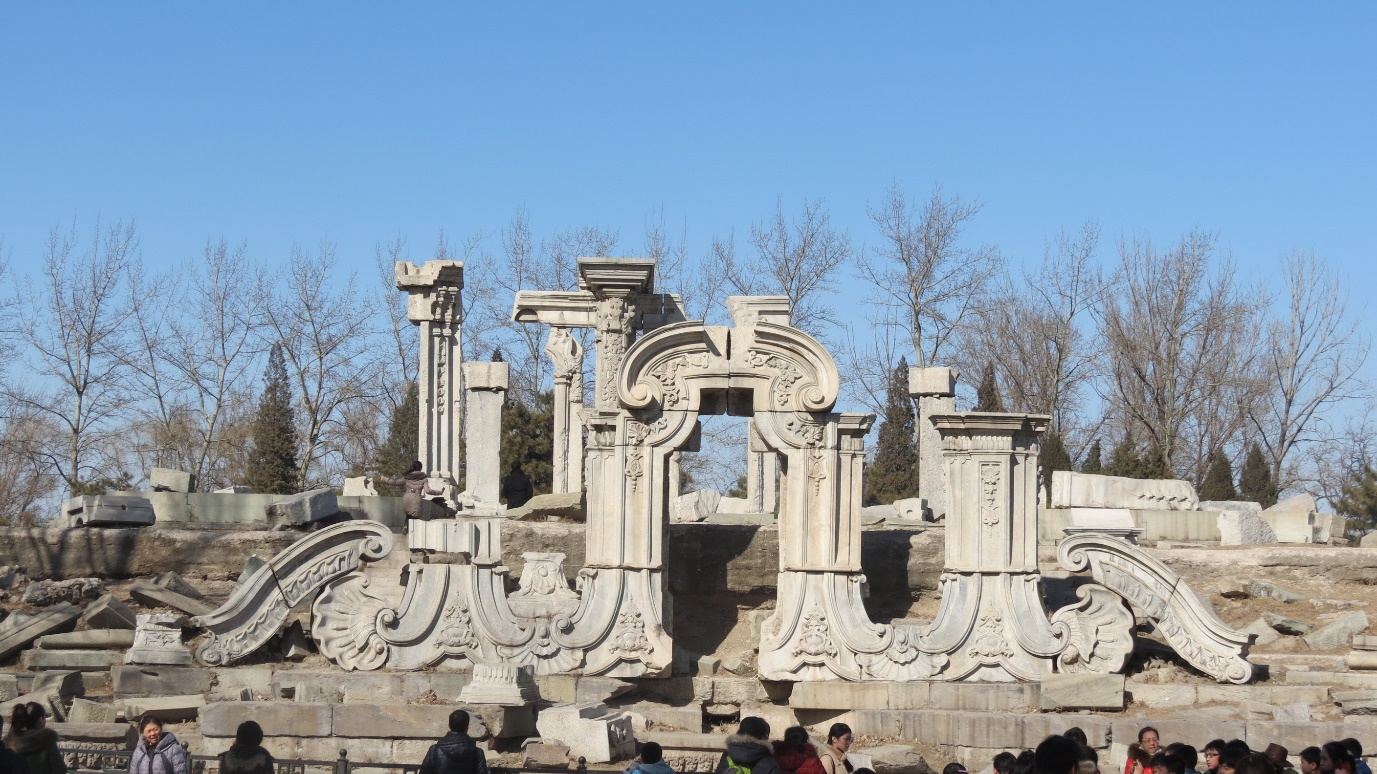
IMAGE: The Old Summer Palace also known as Yuanmingyuan, Beijing; Yuanmingyuan was destroyed by the British and French Colonial Powers in 1860. Abstract In recent years, scholars and commentators (such as Gries 2004; Broudehoux 2004; Callahan 2010; and Wang 2012) on China’s political history and national identities have noted the ever-increasing rise in a complex …
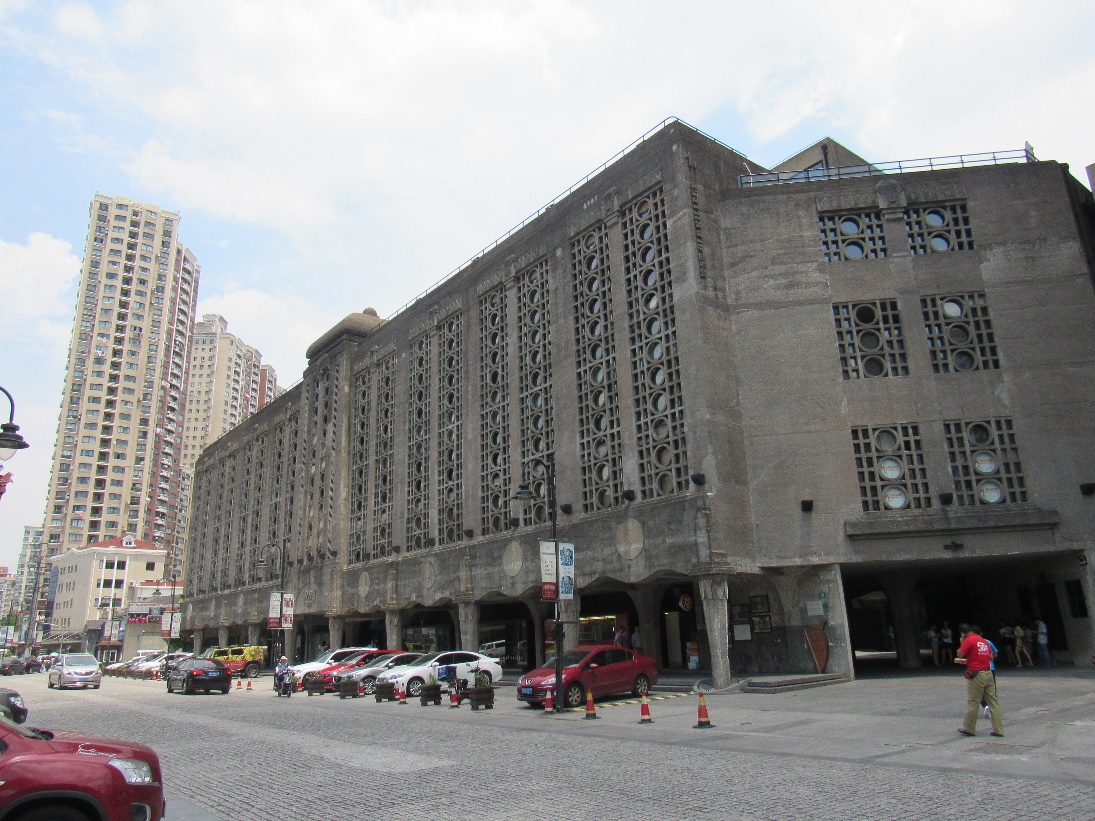
IMAGE: image of the exterior of ‘1933 Shanghai’ designed by the British architect Balfours as a Slaughterhouse. Abstract This paper opens up a discussion over the processes of forgetting and remembering that occur in the adaptive reuse of quite commonplace buildings that, nevertheless, have been classified as ‘heritage’. For most buildings survival depends upon finding …
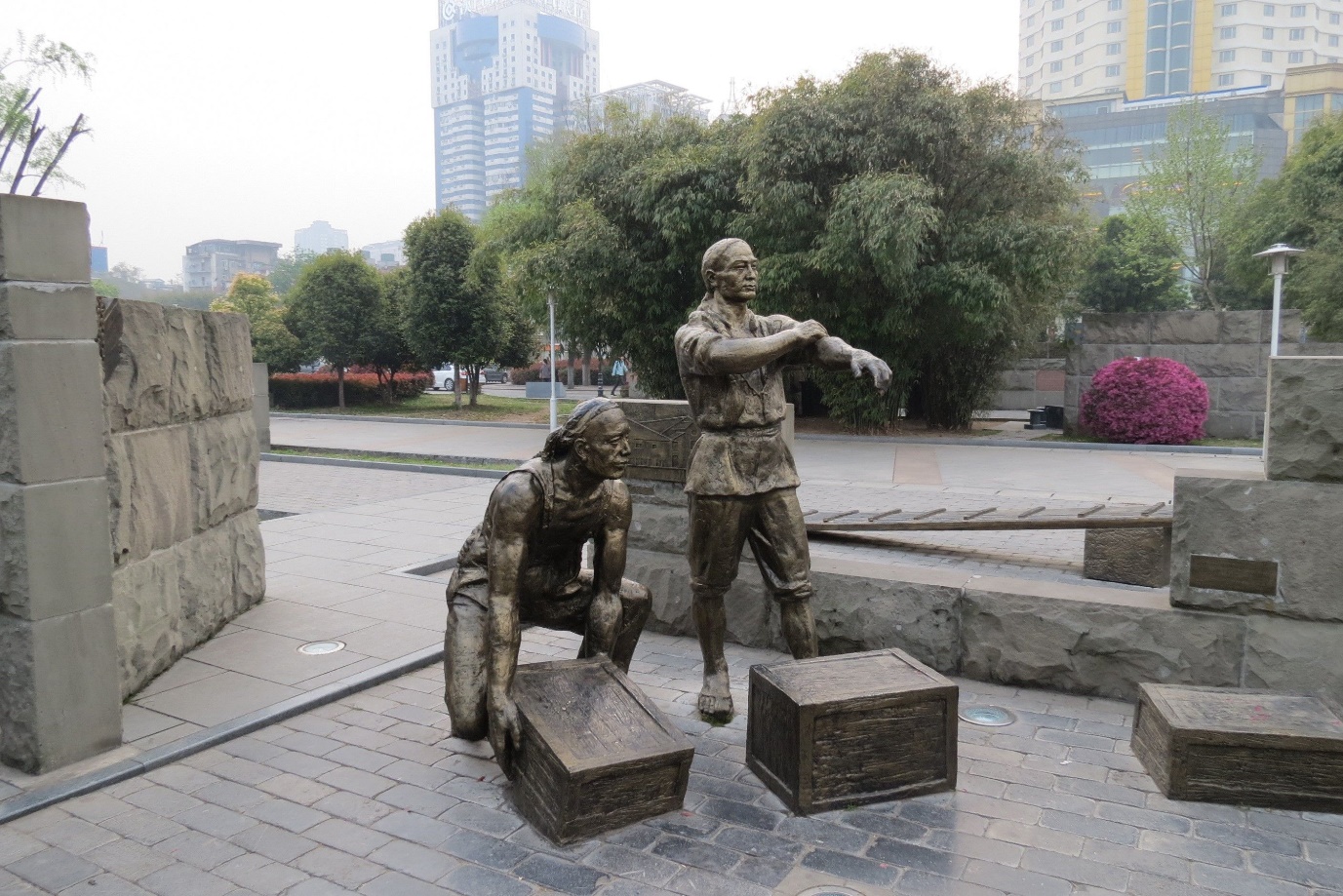
Image: Statue image of two port workers moving cargo boxes, taken by the authors, May 2013; Port Culture Square, Hankou, Wuhan. Abstract In the last few years, discussions of historic urban place-marketing and urban place branding have emerged within the field of Chinese urban studies. Specifically, writers have often discussed how coalitions of the state, …
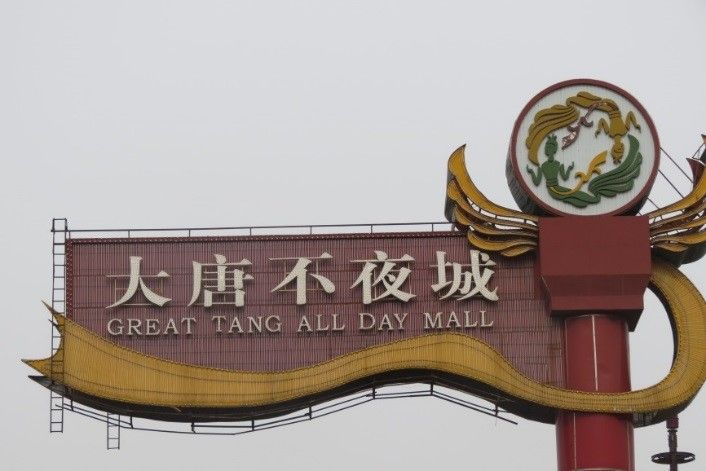
IMAGE: Image of one of the billboards at the Great Tang All Day Mall – Qujiang district, Xi’an. Abstract Over the years interlocutors have pointed to the role of elites in the selective utilisation of history, memory, nostalgia and heritage within modern China; particularly, scholars have pointed to the role of Confucianism, humiliation history and …
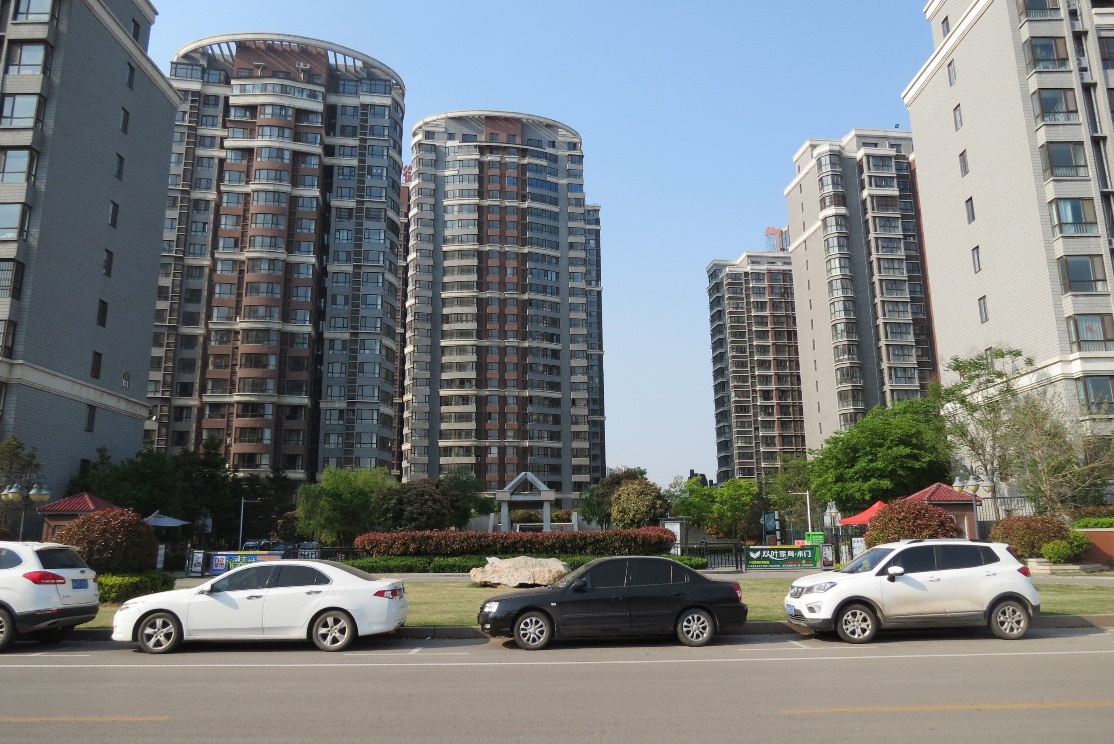
IMAGE: A series of high-end luxury apartments as part of the new North Lake (Beihu) area (Photo taken by authors in April 2019) Abstract In recent years, a great deal of work has emerged on eco-cities in China. Specifically, writers have discussed the role of the entrepreneurial state in the construction of eco-cities and have …

Abstract Context is a crucial concept in architecture in spite of the frequent ambiguity around its use. Although the consideration of context is intrinsic to the process of architectural design, in contemporary theory, little attention is paid to it. By way of contrast, in the 1950s, various architects, theorists, and teachers cultivated several perspectives on …
Abstract Colin Rowe and Fred Koetter’s book Collage City has been one of the most inspiring works in the field of architecture with its elaborate and stimulating critique of Modernist and Post-war architecture and city planning. Published first as an article in 1975 and later as a book in 1978, Collage City has been one …
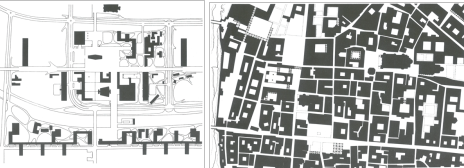
Figure-ground plans of Le Corbusier’s project for Saint Die on the left and Parma on the right. Source: Rowe, Colin and Fred Koetter, Collage City. Cambridge, MA and London: MIT Press, 1978, 62–63. Abstract The seeds of postmodern architecture were sown in the early 1950s and 1960s when architects, theoreticians and teachers developed new design …
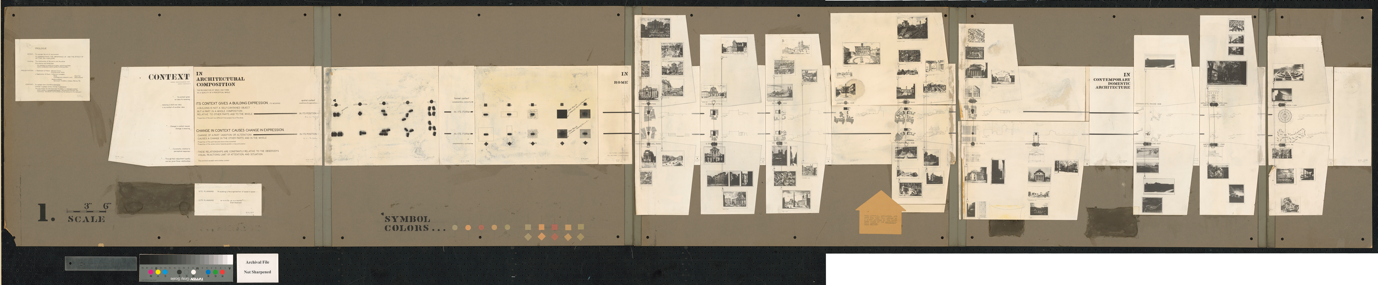
Robert Venturi M.F.A. Thesis Drawing “A Chapel for the Episcopal Academy” Spring 1950. Case Studies from Rome. The Architectural Archives, University of Pennsylvania by the gift of Robert Venturi and Denise Scott Brown. Abstract Understanding of context in the field of architecture has been in a state of flux over the last century, affected by …
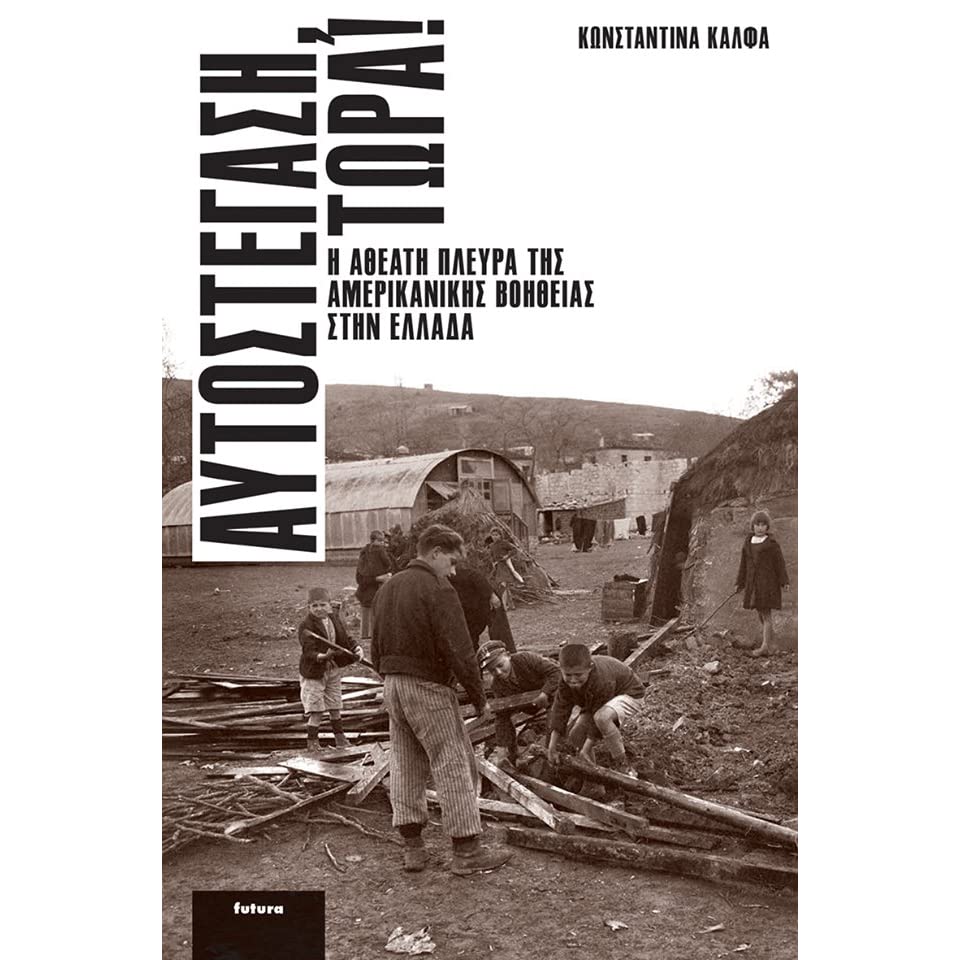
Abstract The book presents the unexplored history of US housing-aid sent to Greece as part of the Truman Doctrine and, later, of the Marshall Plan. It examines US reports and other official documents as well as the role of multiple actors, including two prominent postwar figures: the influential US housing expert Jacob Crane and the …